NUS HRLP 6 – HR Evolution in the Age of AI
The course progresses through three integrated dimensions. First, participants explore The Future of Work and Role of Talent in an Inter-generational Workforce, examining how AI enhances collaboration across generations, addresses industry megatrends, and prepares organizations for emerging workplace technologies including Industry 5.0 and cognitive analytics. Second, the course examines Classic and Progressive HR, analyzing how generative AI transforms people analytics, drives HR transformation, and enables progressive policies that genuinely engage today’s workforce while maintaining employee wellbeing. Finally, participants investigate Room for HR Amidst Pervasive AI, exploring essential human capabilities, generative AI tools revolutionizing HR functions, and how organizations strategically position humans and AI working together for sustainable organizational success.
Through industry readings, case studies, and contemporary insights, this course prepares HR professionals to lead transformation, build AI-ready talent strategies, and create workforces where human judgment and artificial intelligence collaborate meaningfully.
Course Learning Objectives:
- Analyze how artificial intelligence reshapes workforce structures, workplace collaboration, and organizational talent strategies across multigenerational teams and emerging industry paradigms like Industry 5.0.
- Design and implement AI-powered strategies and cross-generational collaboration, and build workforce strategies across diverse business functions.
- Assess the shift from traditional HR to AI-driven people analytics and talent management while maintaining authentic employee engagement and organizational culture.
- Evaluate how Agentic and Generative AI transform and streamline HR operations, support strategic decision-making, and enable high-impact HR activities.
- Interpret ethical AI principles and regulatory considerations in HR contexts to ensure responsible, compliant, and human-centered AI implementation.
- Integrate comprehensive strategies including upskilling, reskilling, change management, and role redesign to support employees during AI adoption and prepare organizations for sustainable success in an AI-augmented workplace.
Faculty
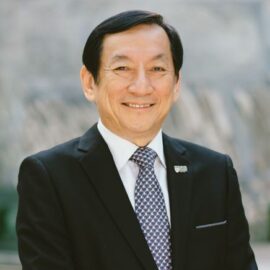
Dr. Janson Yap
Chief People Officer (CPO) | Office of Human Resources (OHR), National University of Singapore
In his HR role, the transformation agenda include developing and implementing the five pillars of the People Strategy namely, (1) Talent Development, (2) Productivity, (3) Engagement and Experience, (4) Culture and (5) Rewards and Recognition. He is also an Adjunct Professor in EE at Biz School.
He actively supports the Disability Artists movement and other sports related platforms.
He had previously served on various Advisory Boards including the IT Steering Committee of SkillsFuture and Asia Accounting Research Centre (AARC). He currently serves on the Advisory Boards of THP Beverage Group and Asia Food Corporation in Vietnam.
He has authored several books on leadership and transformation and work culture. One of his main hobbies include composing songs.
Syllabus
- The Future of Work and Role of Talent in an Inter-generational Workforce
- Classic and Progressive HR
- Room for HR amidst AI
Learning Objectives:
- Understand the VUCAH framework and its implications for navigating polycrisis and permacrisis environments.
- Examine how flexible work models and cognitive analytics are reshaping workforce dynamics
- Understand the characteristics and expectations of an intergenerational workforce, with a focus on Gen Z.
- Evaluate regenerative mindsets across personal, organizational, social, political, economic and natural domains.
- Explore Industry 5.0 principles, including human-centricity, resilience, and sustainability.
- Analyze the changing role of talent in shaping outcomes within a multigenerational workforce.
Module Components:
Video Lectures:
- Technology in 2030 that will change the world
- Regenerative mindset to navigate poly-crisis
- Cognitive Analytics
- Industry 5.0
- Industry 5.0 Unveiled: Embracing Tomorrow’s Technological Revolution
Readings:
- The Role of Artificial Intelligence in Enhancing MultiGenerational Collaboration in the Workplace
- Bridging generations: Building an AI-powered, future-ready workforce
- The Future of Jobs Report 2025
- Megatrends that can change the world
Quiz:
- The Future of Work and Role of Talent
Learning Objectives:
- Leverage the four steps of HR transformation frameworks that guide organizations from traditional HR functions to digitally-enabled, strategic HR operations.
- Understand principles of Digital HR and People Analytics in modern workforce planning.
- Leverage the Ulrich HR Business Partner Model to drive strategic, operational, and employee-focused HR initiatives in modern organizations.
- Analyze the Progressive HR model and its integration of agile practices, employee-centric approaches, and technology-driven solutions.
- Evaluate the WELCOME framework and its relevance in shaping progressive HR work culture.
- Evaluate how Agentic and Generative AI transform HR by automating processes and enhancing strategic, high-impact activities.
Module Components:
Video Lectures:
- The Future of Work – How Automation is Shaping Our Workforce
- Four steps of HR Transformation
- The Role of the HR Business Partner in a Digital Age
- Understanding the Dual Aspects of Wellbeing: Hedonic and Eudaimonic
Readings:
- Generative AI Is Shaking Up People Analytics. 4 Use Cases
- PwC’s US Workforce Transformation Leader speaks exclusively to HR Grapevine about getting 75,000 staff used to working alongside AI agents…
- AI’s Human Impact: How Agentic Technology Is Reshaping Work
- Progressive HR: It’s All About Policies That Truly Engage Today’s Work
Quiz:
- Classic and Progressive HR Work Culture
Learning Objectives:
- Understand the opportunities and risks for HR in an AI-pervasive world.
- Examine major AI advancements, including generative AI, multimodal AI, and their impact on work and creativity.
- Evaluate how AI-human collaboration is reshaping HR roles and workforce strategies across business functions(healthcare, talent, operations, etc.).
- Interpret ethical AI and regulatory considerations in HR and organizational contexts.
- Identify strategies to support employees amidst AI adoption, including upskilling, reskilling, change management, role redesign, and employee engagement.
- Use insights from provided videos and reports to understand how organizations integrate AI into HR systems and future-proof their workforce.
Module Components:
Video Lectures:
- Short reels on Humans and AI
- Intelligence is rare. With AI, intelligence is new territory (Bill gates)
- The Future of Humanity. AI predicts life in 400 years
- The Role of Artificial Intelligence in Human Resource Management
Readings:
- Why Moderna Merged Its Tech and HR Departments
- AI in HR: How AI Is Transforming the Future of HR | Gartner
- AIHR_HR_Trends_Report_2025
- Case Study – AI-Enhanced HR at a Mid-Sized Tech Firm
Quiz:
- Room for HR amidst {pervasive} AI